Contents
Reference / Zones and maps
Zones and maps
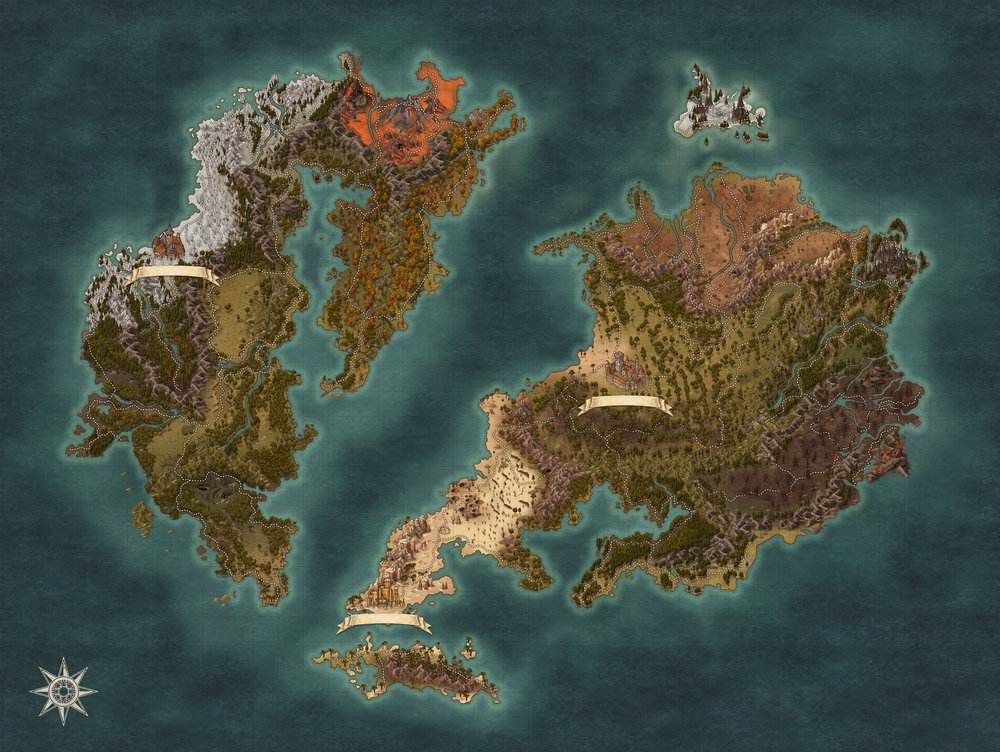
The map table holds every place the build knows about, whether the demo opens it or not. The demo’s play space is one city and the woodland around it — the City of Aldenreach, the woodland and corrupted-woodland farming tiers, and the dungeons those tiers lead into — while two further cities, the desert tiers and the endless rift stay locked. The locked entries are printed anyway and marked as locked, because a reader planning a launch route needs to see what is waiting behind the lock.
- Places in the build
- 23
- Open in the demo
- 14
- Locked in the demo
- 9
- Highest stored tier
- 70
The demo’s play space
Every farming tier and dungeon the demo reaches sits inside one band of enemy levels: 1–25. The woodland starts at level 1, the corrupted woodland carries the band to its ceiling, and the dungeons stay below that. The 5 locked desert tiers continue the same ladder from 26–35, and the endless rift stores tier 70 — a figure far past anything the demo’s own zones spawn.
Every place in the build
The build publishes a name for 5 of these 23 places; the rest are printed as their geography plus the number the entry holds in the build’s own ordering — Woodland 4, Deep dungeon 1 — because the game never gave them a name. That number is the entry’s position in the ordering, not a rank of difficulty: the levels in the next column are what decide where a run belongs.
Towns
1/3 open in the demo
| Place | Enemy levels | In the demo |
|---|---|---|
| City of Aldenreach | 1 | Available in the demo |
| City of Tazan | 1 | Locked in the demo |
| City of Veldak | 1 | Locked in the demo |
The build stores three settlements. Only the first is open in the demo; the other two are the towns of the locked regions.
Farming tiers
8/13 open in the demo
| Place | Enemy levels | Elite chance | Max encounters | Mini-boss | In the demo |
|---|---|---|---|---|---|
| Woodland 1 | 1–2 | 0% | 6 | — | Available in the demo |
| Woodland 2 | 3–4 | 0% | 6 | — | Available in the demo |
| Woodland 3 | 5–7 | 5% | 8 | — | Available in the demo |
| Woodland 4 | 9–10 | 0% | 10 | mini-boss | Available in the demo |
| Corrupted woodland 1 | 21–22 | 0% | 8 | — | Available in the demo |
| Corrupted woodland 2 | 23–23 | 0% | 8 | — | Available in the demo |
| Corrupted woodland 3 | 24–24 | 5% | 8 | — | Available in the demo |
| Corrupted woodland 4 | 25–25 | 0% | 8 | — | Available in the demo |
| Desert 1 | 26–27 | 0% | 8 | — | Locked in the demo |
| Desert 2 | 28–29 | 0% | 8 | — | Locked in the demo |
| Desert 3 | 30–31 | 0% | 8 | mini-boss | Locked in the demo |
| Desert 4 | 32–33 | 0% | 8 | — | Locked in the demo |
| Desert 5 | 34–35 | 0% | 8 | — | Locked in the demo |
Open-air entries, ordered by the enemy levels they spawn. The demo opens the woodland and corrupted-woodland tiers; the five desert tiers are locked.
Dungeons
5/5 open in the demo
| Place | Enemy levels | Elite chance | Max encounters | Mini-boss | In the demo |
|---|---|---|---|---|---|
| Dungeon 1 | 11–13 | 0% | 8 | — | Available in the demo |
| Dungeon 2 | 14–16 | 5% | 8 | — | Available in the demo |
| Dungeon 3 | 16–18 | 0% | 10 | mini-boss | Available in the demo |
| Deep dungeon 1 | 18–19 | 7% | 8 | — | Available in the demo |
| Deep dungeon 2 | 20–20 | 0% | 8 | — | Available in the demo |
Enclosed maps. Each stores a maximum encounter count and a chance of rolling an elite, which is what separates them from the open-air tiers.
Mythic endgame
0/1 open in the demo
| Place | Enemy levels | Elite chance | Max encounters | Mini-boss | In the demo |
|---|---|---|---|---|---|
| Mythic Rift | 1–1 | 0% | 4 | — | Locked in the demo |
The endless challenge mode. Its stored tier is far past anything else in the build, which is why it is listed on its own.
Beyond the demo
0/1 open in the demo
| Place | Enemy levels | Elite chance | Max encounters | Mini-boss | In the demo |
|---|---|---|---|---|---|
| Locked Area | 1–1 | 0% | 4 | — | Locked in the demo |
One entry the build carries but nothing in the demo reaches. It stores no encounter levels of its own.
The single row the build files beyond the demo is the region nothing in the demo reaches: it stores enemy levels 1 and a ceiling of 4 encounters, which is why its band does not continue the ladder the farming tiers climb.
Towns store a minimum level instead of an enemy range, which is the value printed in this column for them.
The order the zones open in
The build files each farming zone behind another one, and those links form a single road rather than a tree: the woodland, the dungeons under it, the corrupted woodland, and then the desert tiers the demo locks. 18 zones stand on the road, in the order below.
The order the zones open in
Step
| Step | Place | Enemy levels | In the demo |
|---|---|---|---|
| 1 | Woodland 1 | 1–2 | Available in the demo |
| 2 | Woodland 2 | 3–4 | Available in the demo |
| 3 | Woodland 3 | 5–7 | Available in the demo |
| 4 | Woodland 4 | 9–10 | Available in the demo |
| 5 | Dungeon 1 | 11–13 | Available in the demo |
| 6 | Dungeon 2 | 14–16 | Available in the demo |
| 7 | Dungeon 3 | 16–18 | Available in the demo |
| 8 | Deep dungeon 1 | 18–19 | Available in the demo |
| 9 | Deep dungeon 2 | 20–20 | Available in the demo |
| 10 | Corrupted woodland 1 | 21–22 | Available in the demo |
| 11 | Corrupted woodland 2 | 23–23 | Available in the demo |
| 12 | Corrupted woodland 3 | 24–24 | Available in the demo |
| 13 | Corrupted woodland 4 | 25–25 | Available in the demo |
| 14 | Desert 1 | 26–27 | Locked in the demo |
| 15 | Desert 2 | 28–29 | Locked in the demo |
| 16 | Desert 3 | 30–31 | Locked in the demo |
| 17 | Desert 4 | 32–33 | Locked in the demo |
| 18 | Desert 5 | 34–35 | Locked in the demo |
The road is what the build’s own prerequisite links say, not advice: it is the enemy levels that decide where a run belongs, and the last 5 steps of the road are the ones the demo keeps locked. The towns, the rift and the single row filed outside the demo hang off the road with no prerequisite at all.
What spawns where
A zone holds a fixed number of encounter slots and rolls one weighted group into each, so the group — not the single creature — is what a run actually meets. 55 groups across 20 zones, and 7 of those zones end their slot list with a boss.
What spawns where
20 rows
| Zone | Enemy levels | Encounter groups | Boss slot | Entry cost |
|---|---|---|---|---|
| Corrupted woodland 1 | 21–22 | — | — | |
| Corrupted woodland 2 | 23–23 | — | — | |
| Corrupted woodland 3 | 24–24 | — | — | |
| Corrupted woodland 4 | 25–25 | 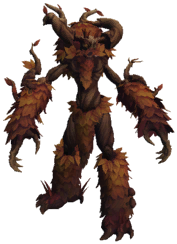 Ancient Oak Treant Rein of the Ancient Oak Treant 1% · Golden Treasure Chest 40% |  1× Demon's Skull | |
| Desert 1 | 26–27 | — | — | |
| Desert 2 | 28–29 | — | — | |
| Desert 3 | 30–31 | Sandstorm Harpy Queen Demon's Skull 100% · Silver Treasure Chest 20% · — 0.01% | — | |
| Desert 4 | 32–33 | — | — | |
| Desert 5 | 34–35 | 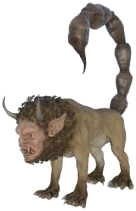 Dread Sand Manticore — 0.01% · Golden Treasure Chest 50% | — | |
| Dungeon 1 | 11–13 | — | — | |
| Dungeon 2 | 14–16 | — | — | |
| Dungeon 3 | 16–18 |  Dark Elf Mage Demon's Skull 100% · Rein of the Dark Elf Mage 1% · Silver Treasure Chest 20% | — | |
| Deep dungeon 1 | 18–19 | — | — | |
| Deep dungeon 2 | 20–20 | 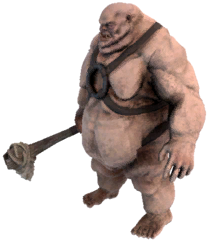 Ogre Rein of the Ogre 1% · Golden Treasure Chest 40% | 1× Demon's Skull | |
| Woodland 1 | 1–2 |
| — | — |
| Woodland 2 | 3–4 | — | — | |
| Woodland 3 | 5–7 |
| — | — |
| Woodland 4 | 9–10 | 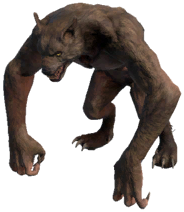 Bloodmoon Werewolf Rein of the Werewolf 1% · Demon's Skull 100% · Silver Treasure Chest 30% | — | |
| Locked Area | 1–1 | — | — | |
| Mythic Rift | 1–1 | Dragon Golden Treasure Chest 100% | — |
A group’s weight is relative to the other groups in the same zone, and most groups weigh the same as each other — where a zone prints no weight, its groups are equally likely. The counts are what the pack holds, and a range means the pack rolls its size. A pack that lists several creatures fills the slot with all of them at once.
Two zones on the road charge a material rather than a level: the corrupted woodland’s last tier and the deep dungeon’s last tier each take a demon’s skull at the gate, and the skull is what the three mini-bosses drop. A skull spent on entry is a skull not spent on the two potions that also want one.
Towns and the two rows the demo never opens store no encounter list at all, which is why they are absent from this table.
What grows where
The ground scatters a mean number of nodes per tile, and each zone picks which node it scatters. Gathering a node yields the material it names, between a floor and a ceiling. 18 zones grow something; the towns and the rift grow nothing.
Where each material grows
5/6
| Material | Best zone | Zones | Yield per node |
|---|---|---|---|
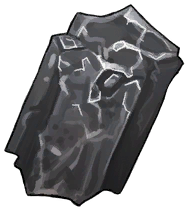 Iron Ore | Deep dungeon 2 0.5 per tile | 5 | 1–2 per node |
 Starleaf | Corrupted woodland 3 0.35 per tile | 11 | 1–2 per node |
 Mushroom | Woodland 4 0.35 per tile | 10 | 1–2 per node |
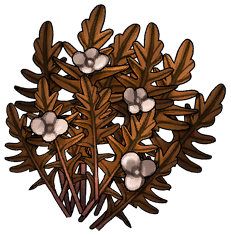 Oak Leaf | Corrupted woodland 4 0.35 per tile | 3 | 1 per node |
 Gold Ore | Deep dungeon 2 0.15 per tile | 3 | 1 per node |
| Demon's Skull | No node grows it | — | — |
Two things worth saying plainly. One node’s asset name does not match what it grants — the node filed as weed is the one that yields starleaf, which is the only place the two disagree. And the demon’s skull, the material the boss stage asks for, is on no node anywhere: the only way to hold one is to take it off the boss.
What grows where
18 rows · 5 kinds of node
| Zone | Nodes per tile | Nodes on the ground |
|---|---|---|
| Corrupted woodland 1 | 0.3 |
|
| Corrupted woodland 2 | 0.3 |
|
| Corrupted woodland 3 | 0.35 |
|
| Corrupted woodland 4 | 0.35 |
|
| Desert 1 | 0.3 |
|
| Desert 2 | 0.3 |
|
| Desert 3 | 0.3 |
|
| Desert 4 | 0.3 |
|
| Desert 5 | 0.3 |
|
| Dungeon 1 | 0.25 |
|
| Dungeon 2 | 0.28 |
|
| Dungeon 3 | 0.3 |
|
| Deep dungeon 1 | 0.4 |
|
| Deep dungeon 2 | 0.5 |
|
| Woodland 1 | 0.15 |
|
| Woodland 2 | 0.3 |
|
| Woodland 3 | 0.3 |
|
| Woodland 4 | 0.35 |
|
A zone with no node list grows nothing at all, however high its tile density reads.
The demo’s level cap is contested
What the map table does settle: the zones themselves. What it cannot settle is how far a character is allowed to level inside the demo.
The demo’s level cap is contested
Three positions stand against each other. The store copy for the demo caps the Warrior at level 20. An official patch title raises the maximum to 25. The closed-beta announcement says the cap was raised to 35 and that further heroes were added. Nothing in the build’s own numbers says which of those the demo in front of a player enforces, and the map table above goes past all three readings — the open tiers already spawn enemies up to level 25. The site prints the conflict rather than picking a side.
ContestedEvery figure on this page belongs to the demo build named in the footer and shown in the chip above the title. A later patch will move them, and the numbers here will describe that patch instead.